Walk onto most factory floors in the UK right now and you'll pick up on it eventually. Not always said out loud. More a feeling. A machine's down and nobody starts it back up because the person who last touched it isn't on shift. A defect turns up on line three and everyone quietly agrees it probably came from line two. Someone spots a trailing cable near the loading bay and just walks past it, because reporting it means filling in a form, and filling in a form means somebody else's problem just became yours.
That's not my job. Four words. Barely anything to say. And yet they cost UK manufacturers more than almost any other sentence spoken on a shop floor.
You already know this if you're running a plant, leading a team, or trying to hold a production line together with a workforce that's stretched thinner than it's been in years. Make UK's own numbers tell the story plainly enough. Around 186,000 manufacturing vacancies are sitting unfilled across the country, a figure that's climbed sharply over the past couple of years, and roughly three in four manufacturers now say a shortage of skills is the single biggest barrier standing between them and growth. Add in that something like one in five people on UK shop floors are now over 55, and you start to see why "not my job" isn't just an annoying attitude problem anymore. It's a capacity problem. When there aren't enough hands to cover for the people who won't take ownership, the whole operation slows down.
I've spent a fair bit of time in UK manufacturing businesses, small family run outfits and big multi-site operations alike, and honestly the pattern repeats itself more than you'd think. Nobody sets out to build a culture where people dodge responsibility. It just sort of happens, quietly, one shrug at a time, until one day the plant manager is wondering why the same defect keeps recurring even though three different people have "looked into it" over the past six months.
This post is about fixing that. Not with a poster in the canteen that says own it in a nice font, but with something more useful. We'll look at why ownership breaks down in the first place, what a genuine culture of accountability actually looks like (it's probably not what you're assuming), how the Plan, Do, Check, Act cycle you might already half be using for quality can become the backbone of that culture, and how to build a governance rhythm around it so it doesn't quietly die by week three, like most initiatives do.
Why "That's Not My Job" Keeps Happening
Before you can fix it, it's worth being honest about where it comes from. In my experience it's rarely laziness. That's the lazy explanation, if you'll forgive the pun.
The first cause is simply unclear ownership. Gallup's research keeps landing on roughly the same figure year after year: only about half of employees can say with confidence what's actually expected of them at work. Half. Think about what that means on a production line where three shifts hand over to each other every single day. If nobody's entirely sure who owns the changeover checklist, or who's responsible when a supplier delivery doesn't match the spec, then "not my job" isn't really an excuse. It's a reasonably accurate description of how things actually stand.
The second cause is fear, and this one gets missed a lot. Plenty of manufacturing sites still run on what's effectively a blame culture, even if nobody would call it that out loud. Someone puts their hand up, admits a mistake or flags a problem outside their usual patch, and what happens? They get landed with fixing it, on top of their own work, with no extra time and not much thanks. Do that to people a few times and they learn fast. Keep your head down. Stay in your lane. It's not that people stop caring, it's that caring got punished.
Third, and this one has got sharper over the last couple of years, is sheer stretch. Skills shortages mean experienced people are being spread across more roles than they should be. Something like 78 per cent of manufacturers are already seeing productivity losses tied directly to skills gaps, and when that happens, the natural response from an overworked supervisor isn't malicious, it's protective. They narrow their focus to survive the shift. Anything outside that narrow patch genuinely does become somebody else's job, because there's simply no capacity left to take on more.
And fourth, honestly, sometimes it comes from the top. I've walked round plants where the andon light's been flashing for twenty minutes and three different team leaders have each assumed one of the others was already on it. Nobody's lazy in that scenario. They've just never seen a manager model the behaviour of stopping what they're doing and dealing with the problem in front of them, regardless of whose name is on it. People copy what leadership actually does, not what the induction handbook says.
What Ownership Culture Actually Means (And What It Isn't)
Here's where I think a lot of manufacturing leaders go wrong, to be honest. They hear "we need more accountability" and reach straight for the disciplinary policy. Tighten the rules. Add a form. Start naming names in the morning meeting. Wrong tool for the job, and it usually makes things worse, not better.
Genuine research on this is fairly consistent. Accountability and psychological safety aren't opposites; they actually need each other to work properly. Researchers at AIHR make the point well, arguing the two should coexist rather than compete. If people are scared of what happens when something goes wrong, they'll hide problems rather than own them, and hidden problems are far more expensive than owned ones, every single time. Franklin Covey's research lands on a similar point, that meaningful accountability comes from building a culture where people feel supported to meet their commitments, not one where they're braced for punishment the moment, they fall short.
So what does it actually look like, practically, on your shop floor?
It starts with clarity, not cleverness. A useful model here is the one Apple popularised, the idea of a Directly Responsible Individual for every task or outcome, however small. You don't need Apple's budget to borrow the principle. For any recurring issue on your line, whether it's a scrap rate, a changeover time, or a maintenance backlog, there should be one named person who owns it. Not a department. Not "the team". A person. RACI thinking, where you're clear on who's Responsible, who's Accountable, who needs Consulting and who just needs Informing, sounds a bit corporate for a shop floor, I know, but stripped back to basics it just means everyone can answer the question "whose job is this" without hesitating.
Then it needs safety layered on top of that clarity. Owning a task means owning the outcome, including when it goes wrong, and that only works if getting something wrong is treated as information rather than a crime. I remember an operations director telling me their scrap rate actually went up for the first month after they introduced proper ownership on the line, and she was genuinely pleased about it. Turned out people had been quietly reworking bad parts off the books for months rather than reporting them, because reporting used to mean trouble. Once it didn't, the real number surfaced. Uncomfortable, but honest, and honest is where you actually start improving something.
Finally, it needs to be reciprocal. Ownership can't only flow downwards. If you expect a machine operator to take responsibility for first time quality, you owe them a machine that's properly maintained, materials that meet spec, and training that actually covers the job they're doing. Ownership without the tools to deliver on it isn't accountability. It's just setting people up to fail and then being surprised when they stop trying.
PDCA: The Framework You're Probably Already Half Using
This is where it gets practical, and where a lot of manufacturers are sitting on a solution, they've never quite pointed at the right problem.
Plan, Do, Check, Act, sometimes called the Deming cycle, has been knocking around manufacturing since the middle of the last century. Most plants use some version of it already for quality improvement, even if nobody calls it PDCA out loud. Toyota built a huge amount of the Toyota Production System around exactly this loop, using it as small, frequent, team run cycles rather than a big top-down programme, and that distinction matters more than people realise.
Here's the bit that's actually relevant to accountability specifically. Done properly, every single phase of PDCA has a named owner attached to it. Not vaguely. Specifically.
Plan is where a problem gets defined and a person commits to a proposed fix, with a clear reason behind it. Do is where that person actually runs the change, on a small scale, for a defined period, so the risk stays low. Check is where the results get reviewed against real data, not gut feeling, and here's the important part, that review happens on a set date agreed up front, not "whenever we get round to it". Act is where the change either gets standardised across the wider operation, dropped because it didn't work, or refined and run again.
Picture a real example. An operator on your assembly line notices scrap creeping up during the late shift specifically, not across the board. Under a proper PDCA approach, that operator doesn't just mention it in passing and hope someone follows up eventually. They own the Plan stage, proposing a small adjustment to a torque setting or a material batch check. They own the Do stage, running the test for a week on their own line. Somebody, maybe a team leader, owns the Check stage, sitting down with the operator and the actual defect data on an agreed date, not whenever it happens to come up in conversation. And together they own the Act stage, deciding whether this becomes the new standard work instruction across all shifts.
Notice what's happened there. At no point was there room for "that's not my job", because the job was written down, dated, and assigned to an actual person from the start. That's the real gift PDCA gives you when it comes to culture. It's not fundamentally about quality tools at all. It's a built-in accountability structure that most manufacturers already understand, they just haven't been using it that way on purpose.
Building the Governance Rhythm That Makes It Stick
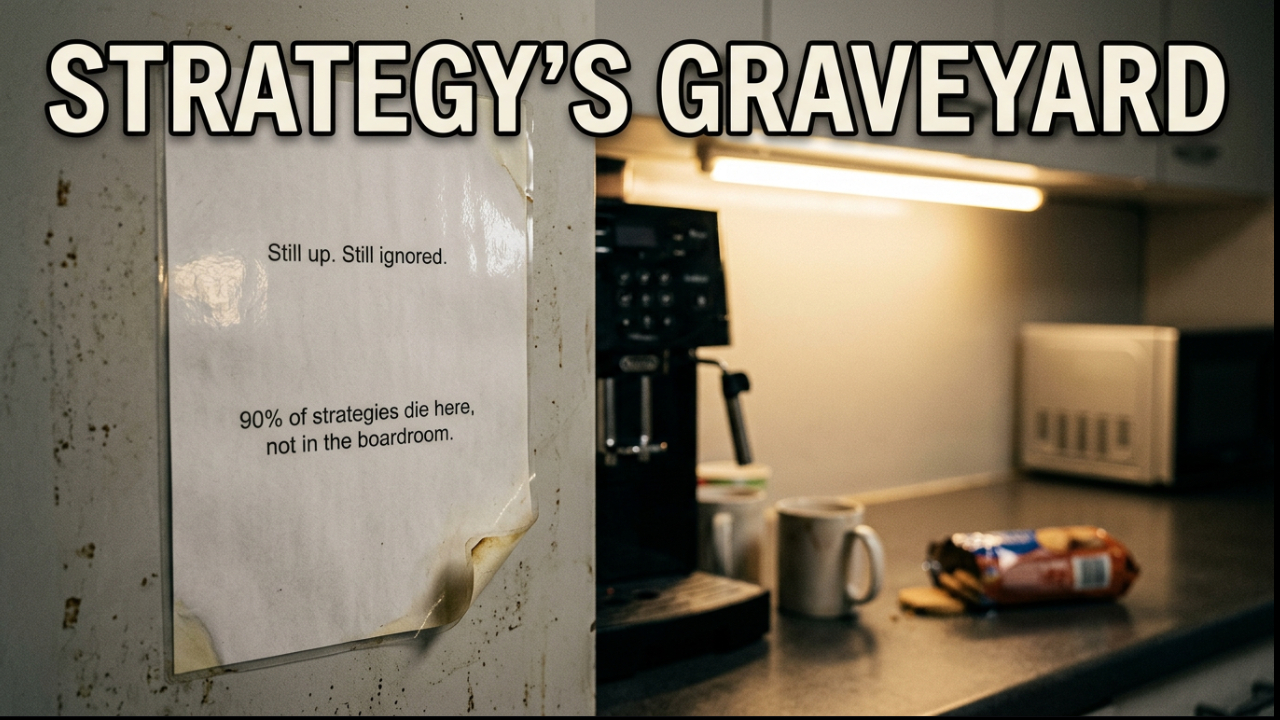
Here's the honest bit nobody much likes hearing. PDCA on its own doesn't create a culture of ownership. I've seen more dead accountability boards than I care to count. A whiteboard up on the wall, marker pens gone dry, last update dated eight months ago, gathering dust next to a safety banner nobody's looked at since the induction tour. That's not governance. That's wallpaper.
What actually makes ownership stick is rhythm. A repeated, boring, unglamorous cadence of checking in on what's owned by whom.
Start with a visual board, physical or digital, it doesn't much matter which, showing every active PDCA cycle running on your site. Some plants use SQCDP boards, covering safety, quality, cost, delivery and people. Others run a simpler huddle board. The format matters far less than the discipline of actually standing in front of it every day. Team leaders should walk their teams through it at the start of every shift. Two minutes is plenty. What's open, who owns it, what's the next step, when's it due.
Then build in a weekly operations review where PDCA cycles that need more resource or cross department input get escalated up. This is where a scrap issue on one line that turns out to be a supplier quality problem gets pulled out of an individual operator's hands and properly owned by procurement or quality, rather than sitting there unresolved because it's genuinely bigger than one person's remit.
Then a monthly review at senior level, connecting the shop floor cycles to the numbers that actually matter to the wider business, your OEE, your first time right percentage, your cost of quality. This is where leadership shows the shop floor that ownership isn't just a shift level exercise. It runs all the way up, because senior leaders are reviewing their own PDCA commitments in exactly the same format, on the same kind of board, with the same consequences for missing a date.
The governance process is what stops PDCA becoming a one-off training day everyone forgets by Friday afternoon. It's the difference between an initiative and a habit, and habits are what actually change a culture. Not memos. Not mission statements. Habits.
Leadership, Patience and the People Bit
One last piece, and it's probably the most important one on this list. None of this works if leaders don't model it first.
There's decent research behind this, not just gut feel. Accountability in a team doesn't take root unless leadership demonstrates it consistently themselves, because people watch what their manager actually does far more closely than they read what the handbook says. If you want your operators owning their PDCA actions, you need to be visibly owning yours too, in the same meetings, on the same board, with the same follow through when the deadline arrives.
Patience matters here as well, maybe more than anything else. Given the pressure most UK manufacturers are under right now, tight margins, skills shortages, rising costs, it's tempting to want a culture shift to land in a fortnight. It won't. Culture is really just the accumulated pattern of what gets rewarded and what gets ignored, repeated often enough that people stop questioning it. That takes months, not weeks, and there will be a stretch in the middle where it feels like absolutely nothing has changed. Stick with it anyway.
And don't overlook training as part of this picture. With apprenticeship reforms bringing new flexibility, including the introduction of foundation apprenticeships, there's a genuine opportunity to build ownership into how new starters are brought up through the business from day one, rather than trying to retrofit it onto people who've spent years being told to stay in their lane. Confidence to take ownership often comes down to plain competence. Someone who genuinely understands the machine they're operating owns problems on it far more readily than someone who's still guessing at what half the buttons do.
Celebrate the small wins too. Not with fireworks necessarily, a five-minute mention in the huddle is often enough, but make sure a completed PDCA cycle, even a failed one that taught you something useful, gets acknowledged out loud. People tend to repeat what actually gets noticed.
Bringing It Together
So where does that leave you.
"That's not my job" doesn't disappear because you told people to have a better attitude. It fades when the job actually has a name attached to it, when raising a problem doesn't come with a punishment attached, and when there's a structure, PDCA in this case, that makes ownership visible, dated and reviewed rather than vague and hopeful.
Given the numbers UK manufacturing is working with right now, close to 200,000 vacancies unfilled, an ageing workforce, and productivity already taking a hit from skills gaps that aren't closing any time soon, building this kind of culture stopped being a nice to have a while ago. You genuinely cannot hire your way out of an accountability problem when there simply aren't enough people to hire. What you can do is make sure the people you already have are clear on what's theirs, supported enough to own it properly, and reviewed often enough that ownership becomes the normal way things get done, rather than the exception worth mentioning in the newsletter.
Start small if that feels more manageable, because it usually is. Pick one recurring problem. Give it one named owner. Run one proper PDCA cycle on it, with a Check date already sitting on the calendar before you even start the Do phase. Put it on a board where people can actually see it. Then show up to that board yourself, consistently, and let your team watch you doing exactly what you're asking of them.
It won't fix everything by next Monday. But it's how you start turning a shrug into a habit worth having, and on a UK factory floor in 2026, that habit might be one of the most valuable things you build all year.
Need Help Building This Across the Whole Business, Not Just One Line?
Everything above works on a single problem, a single line, a single team. But knowing the theory and actually having that governance rhythm running consistently across a whole business are two very different things, and most manufacturing leaders don't have the spare hours to build it from scratch while still keeping production moving.
That's what the Implementation Engine is built for. It's a 90-day programme that takes your strategy off the whiteboard and turns it into named owners, measurable actions and a governance cadence your team actually shows up to, with structured check ins at 10, 30, 60 and 90 days to keep the momentum going long after the first workshop ends.
If you're ready to close the gap between your plan and what's actually happening on your shop floor, book a free 30-minute Vision to Results diagnostic call and see if it's the right fit for where you are.
Explore the Implementation Engine